
Personal and food hygiene
Introduction
Personal hygiene and proper food handling are among the most fundamental principles of safe gastronomy practices. Every individual involved in food preparation, storage, service, or transportation has a responsibility to ensure that food remains safe for consumption.
Food contamination can occur easily if hygiene standards are not followed. Microorganisms such as bacteria, viruses, and parasites may spread through improper hand washing, contaminated surfaces, poor storage practices, or unsafe handling of ingredients. These risks can lead to foodborne illnesses that affect consumers and damage the reputation of a gastronomy business.
For gastronomy entrepreneurs and food professionals, maintaining high hygiene standards is essential not only to comply with regulations but also to build customer trust and ensure the sustainability of their business.
This lesson introduces the key concepts of personal hygiene, safe food handling practices, and contamination prevention that every gastronomy professional should understand.
1. The importance of personal hygiene in food handling
Personal hygiene is the first barrier against food contamination. Food handlers can unintentionally transfer harmful microorganisms to food through their hands, clothing, hair, or respiratory droplets.
Poor hygiene practices are one of the most common causes of foodborne illness outbreaks in restaurants and catering services. Therefore, strict hygiene rules must be followed in all food preparation environments. Personal hygiene protects:
- Consumer health
- The reputation of the business
- Compliance with food safety regulations
- The quality and integrity of the food served
In professional kitchens, hygiene should be considered a daily professional practice, not just a legal requirement.
2. Types of food contamination
Food contamination occurs when harmful substances or microorganisms enter food and make it unsafe for consumption. There are three main types of contamination:
| Type of contamination | Description | Example |
| Biological contamination | Caused by bacteria, viruses,parasites or fungi | Salmonella in raw poultry |
| Chemical contamination | Caused by cleaning agents, pesticides or toxins | Detergent residue on kitchen surfaces |
| Physical contamination | Caused by foreign objects entering food | Hair, glass fragments, metal |
Among these, biological contamination is the most common cause of foodborne illness in gastronomy operations. Understanding these risks helps professionals prevent contamination during food preparation and service.
3. Basic personal hygiene rules for food handlers
Food handlers must follow strict hygiene standards to reduce contamination risks.
Key personal hygiene practices include:
- Washing hands regularly and correctly
- Wearing clean protective clothing
- Keeping hair tied back or covered
- Avoiding jewellery during food preparation
- Covering wounds with waterproof bandages
- Avoiding food handling when sick
These practices form the basis of professional food safety behaviour.
4. Hand hygiene: the most important safety practice
Hand washing is the most effective way to prevent contamination. Hands can carry microorganisms from surfaces, raw ingredients, equipment, or personal contact.
Food handlers must wash their hands:
- before starting work
- after handling raw food
- after using the toilet
- after touching garbage
- after coughing or sneezing
- after touching phones or money
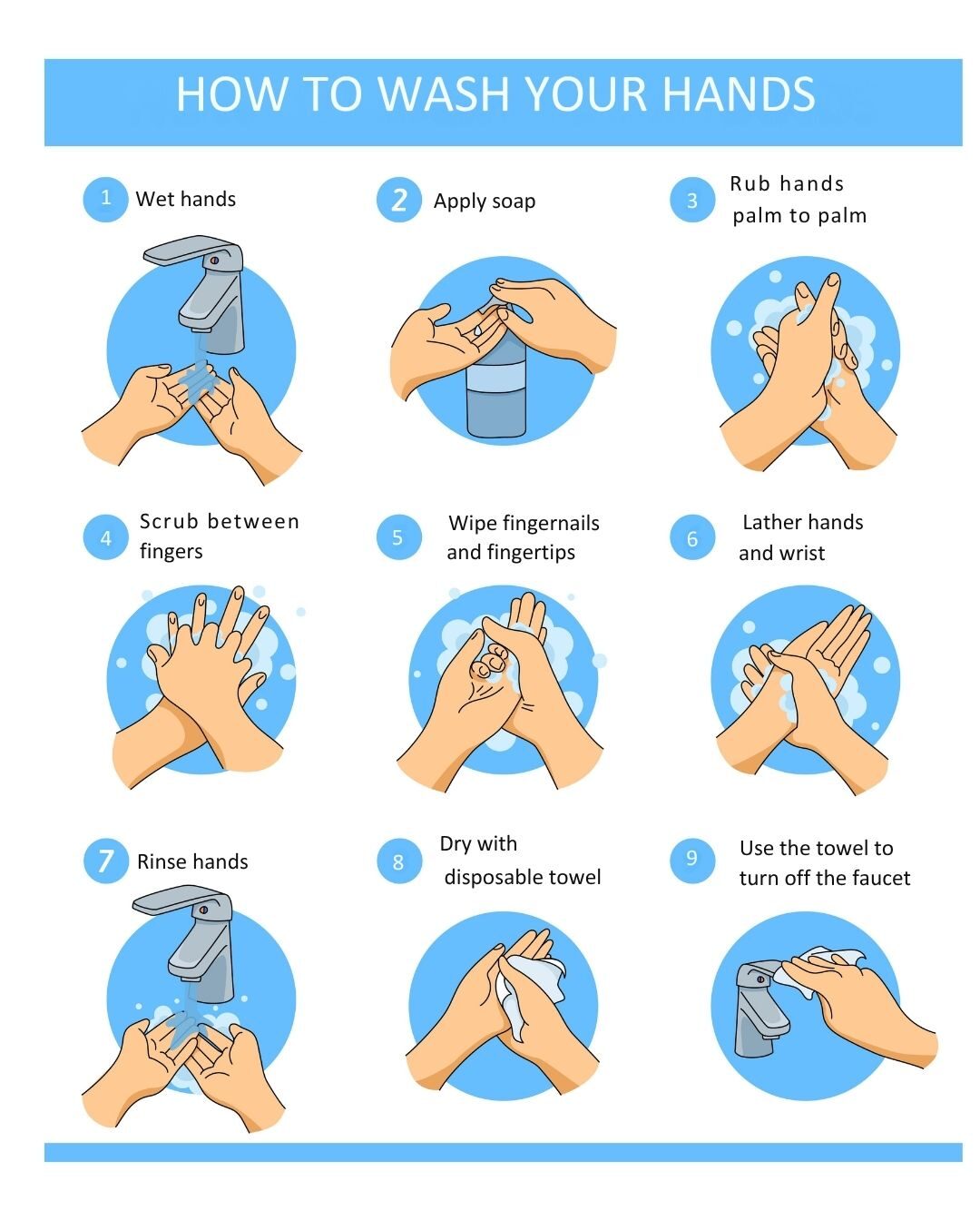
Correct handwashing procedure:
- Wet hands with clean running water
- Apply soap
- Rub hands thoroughly for at least 20 seconds
- Clean between fingers and under nails
- Rinse completely
- Dry with disposable paper towels
Proper hand hygiene significantly reduces the risk of spreading harmful microorganisms.
5. Safe food handling practices
Safe food handling procedures are essential throughout the food preparation process.
Important practices include:
- separating raw and cooked foods
- using different cutting boards for different ingredients
- storing food at appropriate temperatures
- avoiding contact between food and contaminated surfaces
- properly covering and labeling stored ingredients
Example: cross-contamination:
Cross-contamination occurs when bacteria transfer from one surface or food product to another.
Example scenario:
A cook cuts raw chicken on a cutting board and then uses the same board to prepare salad vegetables without cleaning it first.
Result → bacteria from the chicken contaminate the vegetables.
To prevent this, professional kitchens often use colour-coded cutting boards:
| Colour | Food type |
| Red | Raw meat |
| Yellow | Poultry |
| Blue | Fish |
| Green | Vegetables |
| White | Bakery and dairy |
6. Building a hygiene culture in gastronomy businesses
Food safety does not depend on a single person but on the behaviour of the entire team. A strong hygiene culture ensures that safety procedures are consistently applied by everyone involved in food preparation. A professional hygiene culture includes:
- clear hygiene procedures
- regular staff training
- supervision and monitoring
- proper kitchen organisation
- shared responsibility among staff members
Gastronomy entrepreneurs must lead by example, ensuring that hygiene standards are respected and maintained at all times.
Source Canva
Key takeaways
✔ Personal hygiene is the first defence against food contamination.
✔ Poor hygiene practices are a common cause of foodborne illnesses.
✔ Proper hand washing significantly reduces contamination risks.
✔ Safe food handling prevents cross-contamination.
✔ Hygiene should be part of the daily culture of every gastronomy business.
