
Creative methods in gastronomy
Creative methods in gastronomy apply innovative strategies and approaches that allow restaurants, chefs, and food entrepreneurs to stand out, enhance the customer experience, and increase competitiveness.
1. Where should you begin to CREATE and INNOVATE?
The culinary tradition of a place, whether a small town, a city, a region, or an entire country, is built on deep cultural foundations, rooted in the land, its environment, and recipes passed down from generation to generation.
How does this strong sense of identity—which also defines each person’s identity and sense of belonging to their country of origin—reconcile with creativity and innovation?
To find a common ground, the restaurateur must become an innovative custodian, capable of respecting the land and its origins while applying food design and technological skills to the management of the production chain.
The increasingly broad and diverse offering requires a pragmatic and technical approach when defining new dining proposals and gastronomy concepts.
To develop and propose a new gastronomy concept, it is important to take into account current dining trends which, according to Slow Food, reflect consumers’ desire for food that respects the environment and enhances local cultures. In particular, restaurant customers want to see sustainability, local authenticity, and a strong focus on well-being and health.
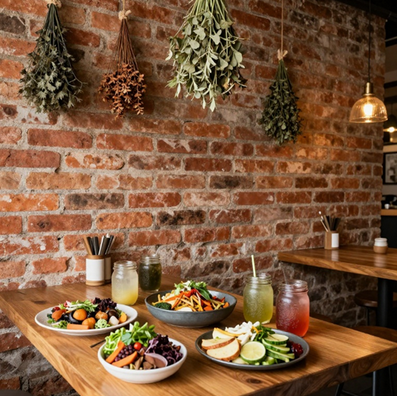
Source: Freepik
Often, customers are not just looking for good food, but for memorable experiences: themed events, tasting menus, chef’s tables, pop-ups, and special collaborations. The emotional and narrative dimension of dining is becoming a central factor in how people choose a restaurant.
The key question is:
What unique experience do we want to offer, and to whom? How can creativity be applied to the design of a gastronomy concept?
To develop differentiation and innovation goals, it is possible to act through the application of certain techniques aimed at enhancing the product:
- Food Design Thinking;
- Innovative culinary techniques;
- Creating immersive experiences;
- Hybrid consumption models.
1.1 FOOD DESIGN THINKING
Food Design Thinking to guide the creation of new dishes or services tailored to meet the needs of specific target groups, such as athletes or vegetarians (see Lesson 2).
1.2 INNOVATIVE CULINARY TECHNIQUES:
By applying food technology to production and even packaging, it is possible to develop products with sensory and nutritional characteristics that align with consumer needs
The main innovative culinary techniques focus on maintaining or enhancing certain nutritional characteristics
Objectives of their use:
- Maintain or improve the nutritional characteristics of the product
- Maintain and/or enhance the sensory characteristics
1.2.1 The low-temperature revolution
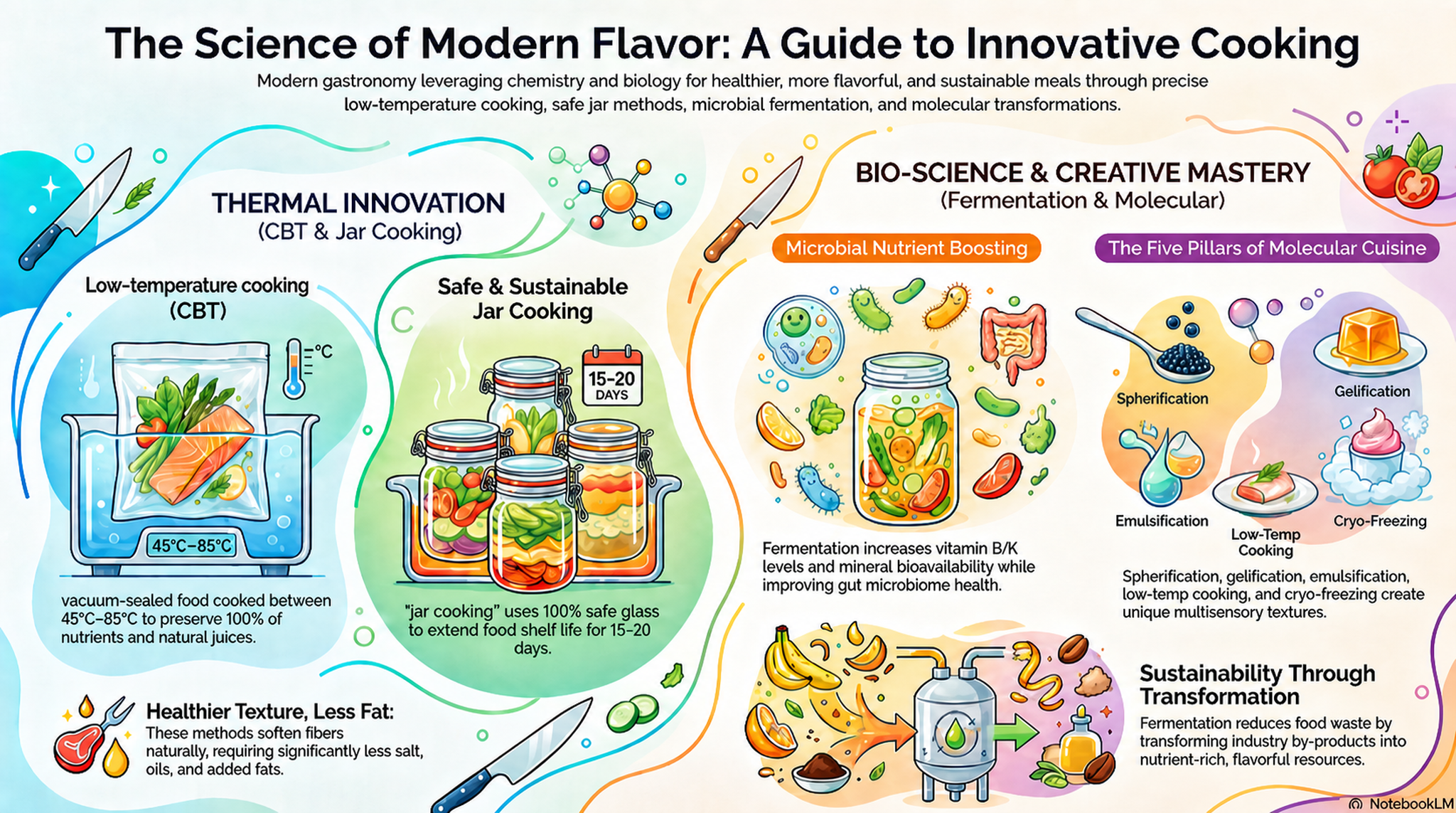
This method (between 45 and 85 °C) prevents the degradation of proteins and water-soluble vitamins, preserving the food’s organoleptic properties and natural juices. Furthermore, it reduces the need to add fats and salt and allows the dish to be flavoured with spices or herbs, which the food absorbs directly. For the food safety of the product, rapid cooling (blast chilling) of the food after low-temperature cooking is essential if it is not consumed immediately. Low-temperature cooking is also known as sous-vide cooking.
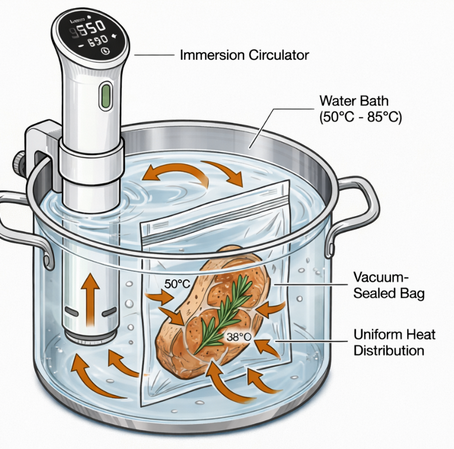
Source: NotebookLM
1.2.2 Jar cooking and steam: well-being through transparency
The use of airtight glass containers allows nutrients and flavors to remain intact during the heating process, ensuring a balanced and wholesome food experience.
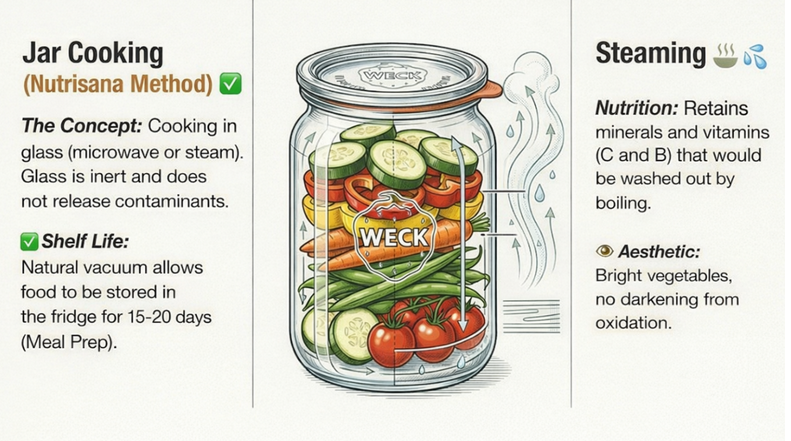
Source: NotebookLM
1.2.3 The power of fermentation: the invisible chefs
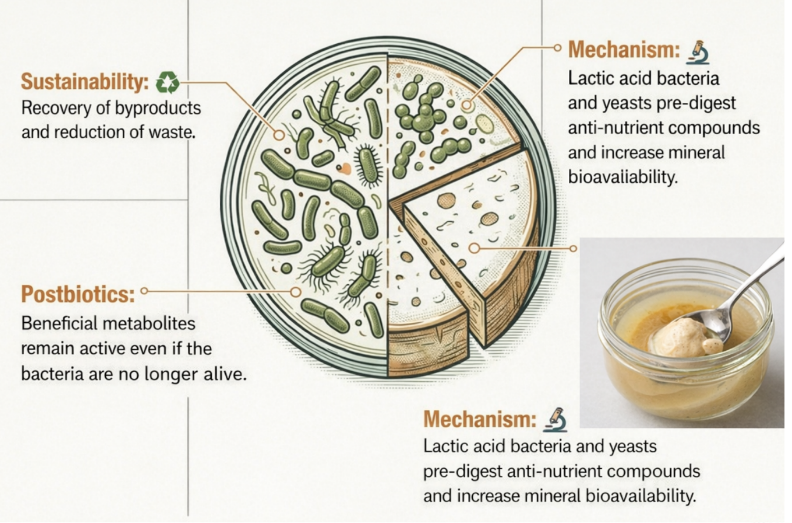
Source: NotebookLM
This process not only enhances nutritional value by increasing the bioavailability of minerals such as calcium and iron, but also enables the production of vitamins and antioxidants, contributing to the balance of the gut microbiome. The microorganisms responsible for fermentation, mainly lactic acid bacteria, help build and support the intestinal microflora, strengthening its beneficial effects.
From simple yogurt to kefir, miso, and tempeh… traditional foods rich in vitality, ready to be rediscovered and appreciated for a healthier cuisine.
1.2.4 Molecular cuisine: physics becomes art
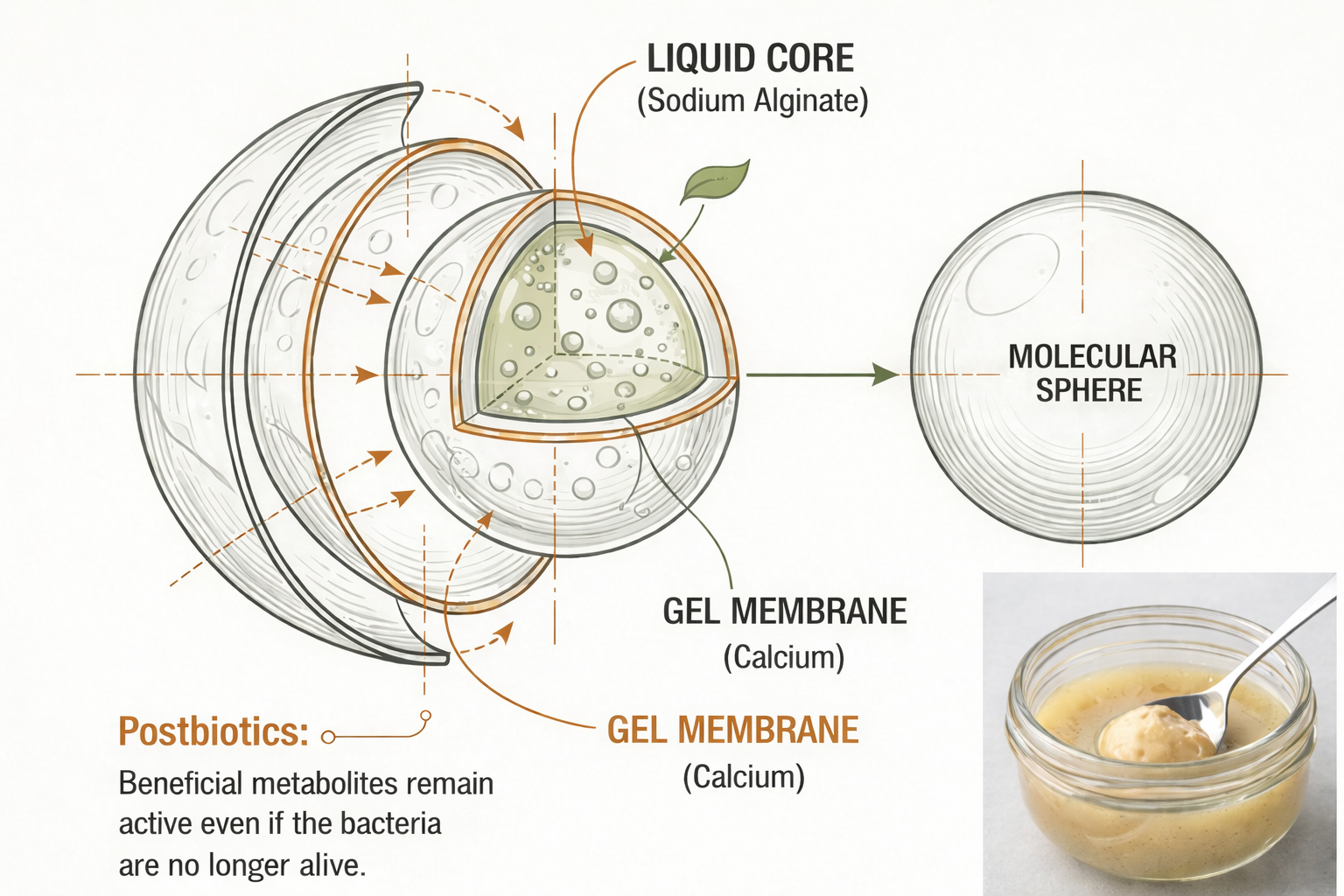
Source: NotebookLM
Chefs express their creativity through specific techniques that transform the very structure of food:
- Spherification: Through the use of sodium alginate and calcium, liquids are turned into small spheres that burst in the mouth, mimicking the texture of caviar.
- Gelification and Emulsification: The use of natural gelling agents (such as agar-agar) or emulsifiers (such as lecithin) allows for the creation of innovative textures like foams, “airs,” and solid gels that challenge traditional cuisine.
- Cryogenic freezing: Liquid nitrogen is used to instantly freeze foods, creating ice creams and sorbets with a perfect structure and spectacular visual effects of smoke.
In summary, molecular cuisine represents a shift in perspective: science provides the language and techniques, while the chef’s creativity uses them to break traditional patterns and offer an experience that goes beyond simple nourishment.
1.3 CREATING IMMERSIVE EXPERIENCES
Creating Immersive experiences to transform the act of eating into a complete experiential moment. An immersive experience engages the customer, environment, food, sounds, and emotions in a way that aligns with the restaurant’s concept. These experiences respond to the growing desire of customers to enjoy engaging moments, a key trend in the hospitality and restaurnat industry.
Key characteristics of dining experiences:
- Multisensory experience: beyond taste, sight, smell, touch, and hearing are all involved during the meal, turning it into a fully engaging experience.
- Storytelling and narrative: Sharing the story behind the dish, including local traditions, its history, and the culinary techniques used to prepare it, transforms the meal into a cultural journey.
- Setting and atmosphere: Seating arrangements, furniture layout, lighting, and colour choices all influence how guests perceive the dishes.
- Interaction: Show cooking is not only achieved through open kitchens but also through themed dinners that allow guests to interact with the chef or watch the preparation process.
Examples of dining experiences
- Fine dining: high-end restaurants that combine aesthetics, service, and refined cuisine.
- Dining in the dark: meals served in complete darkness to enhance aromas and flavours by removing visual distractions.
- Food tourism experiences: guided tastings, food and wine tours, or themed dinners in unique locations.
1.4 HYBRID CONSUMPTION MODELS
Hybrid models combine on-site dining with delivery or click-and-collect services. In all these cases, food is consumed in places different from where it is prepared, meeting the need for convenience without sacrificing quality and uniqueness.
Takeaway has become a rapidly growing segment, especially since the COVID period, and requires careful attention not only to production techniques but also to packaging and transportation.
It is essential to consider cooking methods and preparation techniques that preserve product quality while ensuring food safety. Temperature control throughout the process is crucial to maintain both organoleptic properties and hygiene standards. Not everything is suitable for takeaway or delivery. For example, imagine a plate of spaghetti alla carbonara kept in a container for more than ten minutes, it quickly loses its quality. Likewise, not every dish can be transported over long distances. Setting a maximum delivery radius is often necessary to avoid compromising the final result for the customer.
Menus and offerings must therefore be designed based on these key factors:
- Time
- Temperature
- Packaging type
