
Market segmentation & promotion
1. Market segmentation
Many new entrepreneurs make the mistake of trying to sell their product to everyone, believing that a wider audience means more opportunities. In reality, this approach often leads to wasted time, money, and effort—especially when resources are limited. Successful businesses focus on a specific group of people whose needs they clearly understand. By targeting the right audience, you can communicate more effectively and achieve better results with less effort. For example, instead of promoting a restaurant “to everyone,” it is far more effective to target “young professionals looking for quick, healthy lunch options,” who are more likely to be interested in your concept and respond to your message.
1.1 Market segmentation basics
Market segmentation is the process of dividing a broad target market into smaller, homogeneous sub-groups based on shared characteristics such as demographics, geography, psychographics, or behaviour. A thoughtfully developed and effectively executed market segmentation strategy can provide a company with a competitive edge. By tailoring offerings to specific customer preferences, it enhances satisfaction and makes customers feel their individual needs are genuinely recognized and addressed.
How do businesses divide markets into segments? Below are common approaches used to group customers based on geographic location, demographic attributes, psychographic profiles, behavioural patterns, and organizational characteristics (firmographics).
| Behavioural | Demographic | Geographic | Psychographic | Firmographic (B2B) |
| Benefits sought | Age | Country | Lifestyle | Industry |
| Usage rate | Gender | Region | Values | Company size |
| Purchase frequency | Income | City | Attitudes | Number of employees |
| Brand Loyalty | Education | Climate | Interests | Annual revenue |
| User status | Occupation | Population density | Personal traits | Business model |
| Occasion (usage) | Family size | Urban/Rural | Social class | Years in operation |
| Customer journey stage | Life stage | Time zone | Opinions | Market share |
| Engagement level | Marial status | Infrastructure | Motivations | Growth rate |
| Purchase history | Ethnicity | Terrain | Risk tolerance | Technology adoption |
| Payment behaviour | Nationality | Accessibility | Innovation adoption | Decision-making structure |
1.2 Target audience and customer persona
Target audience refers to the broad, general market segment you wish to reach, defined by high-level characteristics such as demographics, geography, industry, and general interests. It serves as a strategic tool for reach and scale, helping marketers determine where to allocate media budgets, select appropriate channels, and identify the overall universe of potential customers.
Customer persona (or buyer persona) is a detailed, semi-fictional profile of a specific individual within that target audience, representing a key decision-maker or user. It focuses on resonance and personalization, encompassing specific goals, pain points, motivations, buying behaviours, and objections to tailor messaging, content, and sales approaches to individual needs.
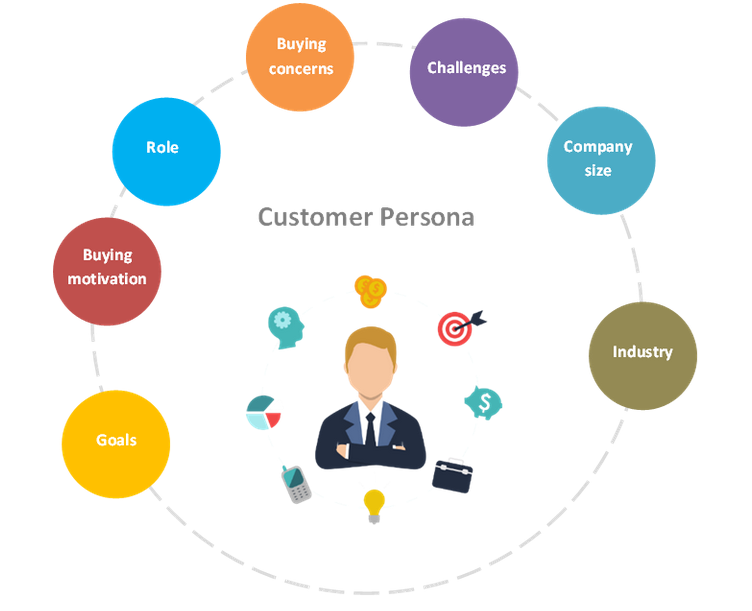
The relationship between the two is hierarchical: the target audience defines who to market to at scale, while the customer persona defines how to engage with the specific people within that group. For example, a target audience might be “urban travelers aged 25–45 who are interested in dining experiences and boutique hotels in major European cities,” whereas a customer persona would be “Sophie, a 32-year-old foodie traveler who plans trips around Michelin-star restaurants, values authentic local cuisine, and often books boutique hotels that offer curated gastronomic experiences.”.
1.3 Benefits of market segmentation
An effective market segmentation strategy delivers significant advantages, ultimately enabling businesses to design, produce, and market the right products to the right audiences.
This is made possible by focusing on clearly defined customer groups rather than targeting a broad, undefined mass market.
Key benefits of market segmentation include:
- More effective marketing campaigns: A clearer understanding of the target market allows companies to tailor their messaging, resulting in more relevant campaigns and higher engagement.
- Enhanced customer experience: By identifying the distinct needs and preferences of different segments, businesses can create experiences that feel more relevant and personalized. Customers respond positively when products and communications align with their specific expectations and pain points.
- Stronger customer loyalty: Personalized and consistently positive experiences encourage repeat purchases and help build long-term loyalty.
- Better products and services: Segmentation insights enable companies to refine their offerings so they more accurately meet the needs of specific customer groups.
- Higher conversion rates: Marketing efforts that are aligned with the preferences and behaviours of targeted segments are more effective at turning prospects into customers.
1.4 Steps when implementing market segmentation
- Define your target market: Begin by identifying the broader market you want to serve. Analyse industry trends, customer expectations, and common challenges, and assess how effectively your product or service responds to these needs.
- Gain a deep understanding of your market: Effective segmentation relies on solid data. Use research methods such as surveys, focus groups, analysis of online behaviour, and, where possible, customer purchase data to uncover patterns and preferences.
- Segment your market: Once you have a clear understanding of your overall market, divide it into distinct and meaningful groups. Segmentation should be based on relevant characteristics—shared traits like age or gender alone are not always sufficient to define useful segments.
- Develop customer personas: Transform your data into detailed profiles representing each segment. These personas should include a name, background description, key motivations, challenges, and typical purchasing behaviours.
- Evaluate and refine your marketing strategy: After defining your segments, design and test targeted marketing approaches. This may involve A/B testing different messages or visuals, monitoring performance indicators such as engagement and conversion rates, and continuously adjusting strategies based on results.
1.5 Positioning
1.5.1 What is positioning?
Positioning is the strategic process of creating a distinct mental image or perception of a brand, product, or service in the minds of target customers relative to competitors. It is not about what is done to the product/service itself, but rather what is done to the mind of the prospect to establish a unique space in the market.
Market positioning plays a critical role in the success of a product. When done effectively, it helps attract the right audience and convinces customers that your product is the best choice among many alternatives. Poor positioning, on the other hand, may result in the product being ignored.
Positioning is closely linked to a company’s brand image and shapes how customers perceive it. It should reflect the business’s core values and clearly communicate what it stands for. A strong positioning strategy helps a business stand out from competitors and creates a distinct identity in the market.
It also supports internal teams (such as marketing and sales) in delivering a consistent and engaging customer experience, which can improve customer loyalty and long-term retention.
Key elements of effective business positioning include:
- Differentiation: Clearly articulating what sets the brand apart from competitors, whether through product features, quality, price, or customer experience.
- Target Audience Alignment: Tailoring the value proposition to resonate with the specific needs, pain points, and desires of a defined customer segment.
- Consistent Messaging: Communicating a clear and unified value proposition across all marketing channels to build brand recognition and trust.
- Competitive Advantage: Influencing consumer perception to gain a strategic edge, often by filling a gap in the market or challenging existing competitors.
1.5.2 Types of positioning
Positioning helps a business define how it wants to be seen by customers. It allows entrepreneurs to create a clear identity and stand out in a competitive market. In hospitality, good positioning helps attract the right customers and communicate the value of the experience offered.
| Positioning type | What it means | Hospitality/gastronomy example | Why it matters |
| Customer Needs | Focus on meeting the specific needs, expectations, or problems of a target group. | A café offering fast, affordable meals and free Wi-Fi for students | Helps attract a clearly defined audience and increases customer satisfaction |
| Quality-based | Emphasises high quality in products, ingredients, or service experience | A restaurant promoting fresh, local, or organic ingredients | Builds trust and allows businesses to charge higher prices |
| Price-based | Competes by offering lower prices or better value for money | A takeaway offering budget meal deals or combo offers | Attracts price-sensitive customers and increases volume of sales |
| Use / Occasion-Based | Links the business to a specific moment, situation, or experience. | A restaurant known for brunch, romantic dinners, or business lunches | Helps customers quickly understand when and why to choose the business |
| Competitor-Based | Highlights differences or advantages compared to competitors. | “Faster service” or “more authentic cuisine than others” | Helps the business stand out in a crowded market |
Tip: Choose one main positioning strategy to keep your message clear. Trying to combine too many can confuse customers.
2. Promotion
2.1 What is promotion in marketing?
In marketing, promotion refers to all the communication activities a business uses to inform and persuade its target audience about a product, service, or brand. Its purpose is to highlight the value and benefits offered and influence how customers perceive the business.
Promotion helps create a clear and memorable image in the minds of customers. This can be done by appealing to logic (e.g. price, quality) or emotions (e.g. experience, lifestyle).
The main objectives of promotion are to:
- increase awareness of a business or brand
- attract customer interest
- encourage purchases
- build customer loyalty over time
Promotion is one of the four key elements of the marketing mix, often referred to as the 4 Ps: product, price, place, and promotion.
Promotion includes different communication methods that work together as part of a promotional strategy. These typically include:
- advertising
- personal selling
- sales promotions (e.g. discounts, offers)
- direct marketing
- public relations and publicity
- word-of-mouth communication
- events, exhibitions, and trade shows
A promotional plan helps businesses decide how to use these methods effectively, including how much budget and effort to allocate to each one.
2.2 Key promotion channels
For gastronomy businesses (restaurants, cafés, food trucks, catering), promotion channels should be highly visual, local, and experience-driven. The goal is to attract nearby customers, showcase the food and atmosphere, and build trust quickly.
| Channel | Description | How it works in practice | Business impact |
| Social Media | Platforms to share visual and interactive content e.g. Instagram,TikTok | Posting photos/videos of food, promotions, events, engaging with customers | Highly visual → attracts attention and influences customer choices |
| Online Maps & Reviews | Platforms where customers search and review businesses | Listing location, menu, photos, collecting reviews | Essential for visibility and trust; many customers decide based on reviews |
| Food Delivery Platforms | Apps that allow customers to order food online | Offering menus, promotions, delivery services | Expands reach and attracts new customers beyond physical location |
| Website / Online Presence | A website or online page with business information | Displaying menu, location, hours, contact details | Builds credibility and provides reliable information |
| Local Promotion (Offline) | Physical promotion in the local area | Flyers, posters, signage, partnerships with local businesse | Targets nearby customers and increases walk-in traffic |
| Word of Mouth | Recommendations from customers (offline or online) | Reviews, ratings, customer sharing experiences | Very influential and trust-based; drives new customers |
| Events & Experiences | Special activities organised by the business | Live music, themed nights, tastings | Creates engagement and encourages repeat visits |
| Promotions & Offers | Short-term incentives to attract customers | Discounts, loyalty cards, meal deals | Encourages trial and repeat purchases |
