
Customer engagement in gastronomy
Introduction
Customer engagement in gastronomy refers to the ways in which businesses interact with customers in order to create meaningful, memorable, and value-driven experiences. It goes beyond simply serving food; it involves building an emotional and experiential connection between the customer and the dining environment. This connection is shaped by multiple elements such as service quality, communication, atmosphere, storytelling, and personalization. In today’s gastronomy sector, customers are not only looking for good food but also for experiences that make them feel valued, recognized, and involved in the process.
1. The customer journey in gastronomy
Customer engagement can be understood through the concept of the customer journey, which consists of three main stages. The first stage occurs before the experience, when customers form expectations based on a business’s online presence, reviews, visual identity, and menu presentation. At this stage, clear communication and strong storytelling can attract customers and shape their perceptions. The second stage takes place during the experience, where direct interaction occurs through staff behavior, service quality, ambiance, and food presentation. This is the most critical phase, as it directly influences how customers perceive the overall experience. The final stage happens after the experience, where businesses maintain relationships through feedback collection, social media interaction, and loyalty strategies. Managing all these stages effectively ensures a continuous and consistent engagement process.
2. Why customer engagement matters
Customer engagement plays a fundamental role in the success of gastronomy businesses because it helps create stronger relationships between customers and the dining experience. Effective engagement offers several important benefits:
- Increases customer satisfaction
- Builds trust and long-term loyalty
- Encourages repeat visits
- Generates positive word-of-mouth
- Creates a competitive advantage

Source: Freepik
In addition, customer engagement is increasingly linked to authenticity, transparency, and shared values. Modern customers tend to prefer experiences that reflect cultural identity and meaningful narratives rather than standardized or impersonal services. For example, explaining the origin of ingredients, highlighting local producers, or sharing the story behind a dish can create a stronger emotional bond between the customer and the experience. These practices help transform customers from passive consumers into active participants, increasing their level of involvement and satisfaction.
3. Key points to consider in gastronomy customer engagement
- Understand customer needs: Identify preferences, dietary habits, and expectations.
- Create a memorable experience: Focus not only on food but also on atmosphere, service, and storytelling.
- Personalization: Offer tailored recommendations, special menus, or customized services.
- Effective communication: Be clear, friendly, and responsive both in-person and online.
- Quality and consistency: Maintain high standards in taste, presentation, and service every time.
- Cultural sensitivity: Respect different cultural backgrounds and food traditions.
- Transparency: Provide clear information about ingredients, sourcing, and preparation.
- Engagement through storytelling: Share the story behind dishes, local products, or chefs.
- Use of digital platforms: Engage customers via social media, websites, and online reviews.
- Feedback and interaction: Encourage reviews and actively respond to customer feedback.
- Sustainability awareness: Highlight eco-friendly practices and ethical sourcing.
- Emotional connection: Build trust and loyalty through warm, human-centered service.
4. Building emotional connection and community
Furthermore, effective customer engagement contributes significantly to customer loyalty and community building. When customers feel emotionally connected to a gastronomy experience, they are more likely to return, recommend the business to others, and engage through digital platforms.
This not only strengthens the relationship between the business and its customers but also creates a sense of belonging and shared identity. In this sense, gastronomy is not only about food service but also about creating a social and cultural space where interaction, experience, and values come together.
5. Storytelling in gastronomy entreprenership
One of the most effective tools for strengthening customer engagement in gastronomy is storytelling. Storytelling in gastronomy entrepreneurship plays a crucial role in creating a strong brand identity and emotional connection with customers.
By sharing the origin of ingredients, cultural heritage, or personal journeys behind a dish, entrepreneurs can transform a simple meal into a meaningful experience. This narrative approach not only differentiates a business in a competitive market but also adds authenticity and value, making customers more engaged and loyal.
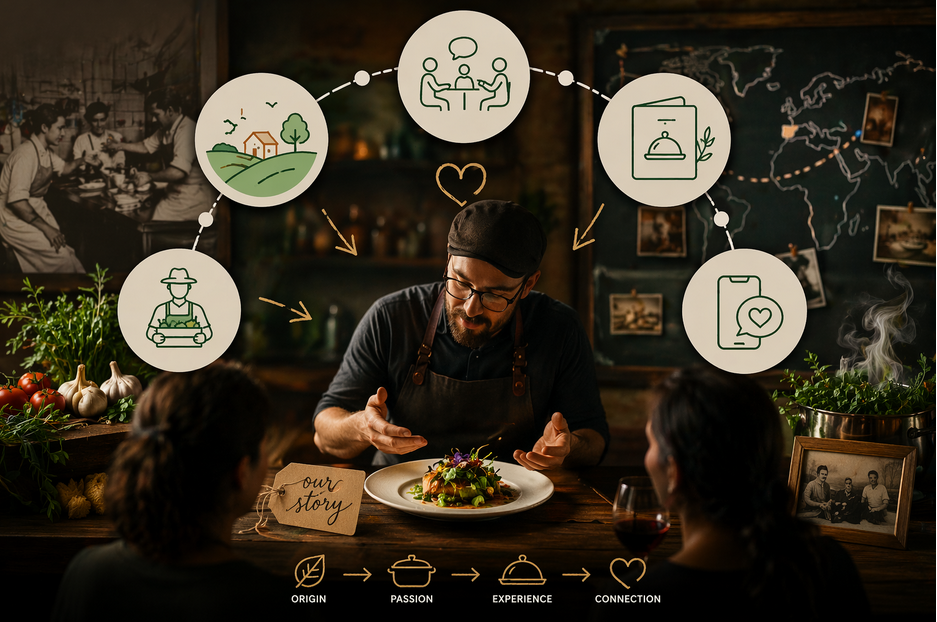
Moreover, storytelling can be a powerful marketing and communication tool. Through menus, social media, and customer interactions, gastronomy entrepreneurs can communicate their values such as sustainability, local sourcing, and tradition. This helps build trust and strengthens the overall customer experience, encouraging repeat visits and word-of-mouth promotion.
In this way, storytelling becomes an essential strategy for both business growth and long-term sustainability.
6. Conclusion
In conclusion, customer engagement is a fundamental element of modern gastronomy. By combining quality service, personalization, communication, emotional connection, and storytelling, gastronomy businesses can create meaningful experiences that strengthen customer satisfaction, loyalty, and long-term success
