
Culinary heritage, ethics & environmental ımpact
1. Culinary heritage
Culinary heritage carries deep cultural significance as it reflects the identity, history, and values of a community. Traditional dishes, cooking techniques, and food rituals are not created randomly; they are shaped over time by generations responding to their environment, beliefs, and social structures. Through food, people express who they are, where they come from, and what they value. For example, recipes passed down within families often become symbols of belonging and continuity, linking past and present in a meaningful way.
Regional diversity in gastronomy further highlights how geography, climate, and local resources influence food cultures. Different regions develop distinct cuisines based on available ingredients and environmental conditions. Coastal areas may rely heavily on seafood, while inland regions might focus on grains, livestock, or preserved foods. This diversity not only enriches global gastronomy but also demonstrates how humans adapt creatively to their surroundings.
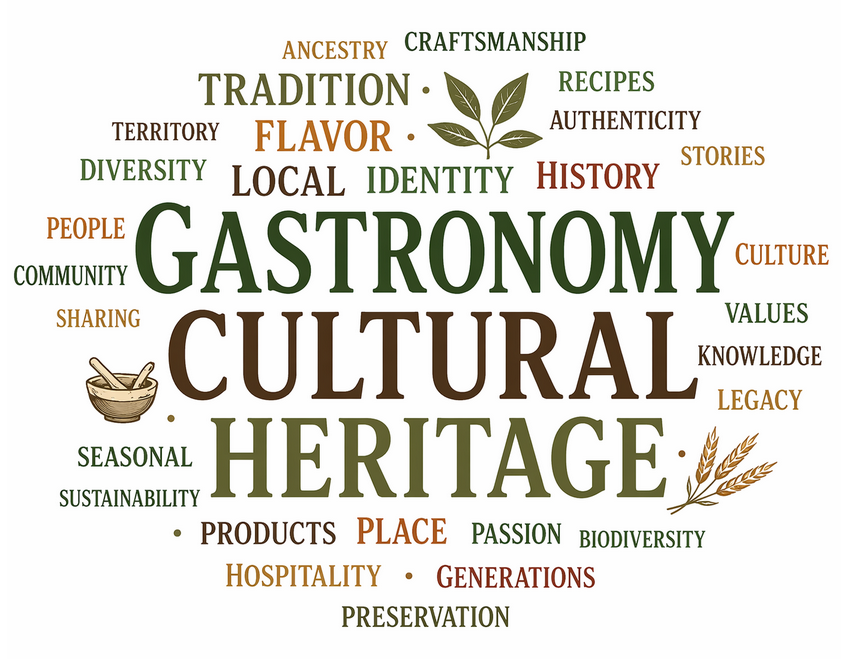
Moreover, culinary heritage plays an important role in social cohesion and cultural exchange. Shared meals, festivals, and food-related traditions bring people together and strengthen community bonds. At the same time, interactions between cultures—through migration, trade, or globalization—lead to the blending and evolution of cuisines. This dynamic nature of food culture shows that while culinary heritage preserves tradition, it also remains open to innovation and change.
A region’s culinary identity does not emerge by accident. It is sculpted by the interaction of four primary factors:
| Factor | Impact |
| Geography & Climate | Determines which crops grow and dictates preservation methods (e.g., drying, fermenting).with suppliers and customers. |
| Religion & Beliefs | Defines dietary restrictions and ritualistic foods (e.g., Lenten meals, Halal/Kosher practices). |
| History & Migration | Enriches the palate through cultural exchange (e.g., the influence of the Silk Road). |
| Economy | Creates the distinction between “haute cuisine” (palace) and “peasant food” based on ingredient access. |

Source: Freepik
2. Gastronomy ethics
Sustainable and ethical gastronomy is based on the idea that food should be produced and consumed in ways that protect the environment, respect people, and preserve cultural traditions. One of its core principles is environmental sustainability, which focuses on reducing negative impacts such as carbon emissions, water overuse, and biodiversity loss. This includes practices like choosing local and seasonal ingredients, minimizing food waste, and supporting farming methods that protect soil and ecosystems.
Another key principle is social and ethical responsibility. This means ensuring that everyone involved in the food system—from farmers to workers—is treated fairly and paid appropriately. Ethical gastronomy also includes concerns such as animal welfare, transparency in food production, and respect for local communities. By making informed choices, consumers and professionals can support fair trade and responsible sourcing practices.
Another important dimension of sustainable and ethical gastronomy is cultural preservation. Food is not only a source of nutrition but also a reflection of identity, history, and tradition. Protecting traditional recipes, local ingredients, and culinary techniques helps maintain cultural diversity and prevents the loss of gastronomic heritage. In this sense, gastronomy becomes a bridge between past and future generations. In addition, economic sustainability plays a crucial role. Supporting local producers, small-scale farmers, and artisanal food makers contributes to resilient local economies. Short supply chains, such as farmers’ markets and direct sales, reduce dependency on large industrial systems and create more balanced economic opportunities within communities.
Finally, education and awareness are essential for promoting sustainable food systems. Raising awareness among consumers, students, and professionals encourages more responsible food choices. Educational initiatives can help individuals understand the environmental, social, and cultural impacts of their decisions, fostering a more conscious and sustainable food culture.
3. Slow Food movement
The Slow Food movement represents a well-known approach to sustainable gastronomy, built around the values of “good, clean, and fair” food. Good refers to food that is tasty, healthy, and culturally meaningful. Clean emphasizes environmentally friendly production that does not harm ecosystems. Fair highlights equitable conditions and pricing for producers and workers. Together, these values encourage a more conscious and responsible relationship with food, promoting both sustainability and cultural preservation.
Source: ChatGPT
3.1 What Slow Food IS
- A global movement: Founded in Italy in 1989 by Carlo Petrini as a direct resistance to the opening of a McDonald’s near the Spanish Steps in Rome.
- Driven by three core principles: It advocates for food that is good (high quality, flavorful, healthy), clean (produced sustainably without harming the environment), and fair (accessible prices for consumers and fair compensation for producers).
- A defender of biodiversity: It actively works to protect local food cultures, traditional cooking methods, and endangered plant and animal species through initiatives like the “Ark of Taste.”
- Community-focused: It emphasizes building strong relationships between consumers (co-producers) and local, small-scale farmers, artisans, and food producers.
- Educational: It promotes food education, encouraging people to understand where their food comes from, how it is grown, and the cultural history behind it.
3.2 What Slow Food is NOT
- Not just about eating slowly: While taking the time to enjoy a meal is part of the ethos, the movement is primarily about the source, production, and cultural impact of the food, rather than just the chewing speed.
- Not a diet or weight-loss program: It does not dictate calorie counts or restrict food groups. It focuses on the quality and ethical sourcing of ingredients rather than nutritional restriction.
- Not elitist: Although artisanal food can sometimes be more expensive, the movement fights for fair food systems where nutritious, culturally significant food is accessible to everyone, not just the wealthy.
- Not anti-technology: It does not reject modern advancements. Instead, it opposes destructive industrial agriculture and factory farming, supporting sustainable innovations that protect the earth and human health.
- Not standardized: Unlike the fast-food industry, which aims for the exact same taste everywhere in the world, Slow Food celebrates regional differences, seasonality, and unique local flavors.
4. Environmental impact

Awareness of the environmental impact of food production and consumption practices is essential for making more responsible and sustainable choices. Different methods of producing food can have significantly different effects on the environment. For example, industrial agriculture often relies on intensive use of water, chemical fertilizers, and pesticides, which can lead to soil degradation, water pollution, and loss of biodiversity. In contrast, more sustainable approaches such as organic farming or agroecology aim to protect natural resources and maintain ecological balance.
Food consumption habits also play a critical role in environmental impact. Diets that rely heavily on processed foods or imported products tend to have a higher carbon footprint due to transportation, packaging, and energy use. On the other hand, choosing local, seasonal, and minimally processed foods can reduce emissions and support local economies. Additionally, reducing food waste is one of the most effective ways to minimize environmental harm, as wasted food represents lost resources such as water, energy, and labor.
Developing awareness in this area encourages individuals to reflect on their daily choices and understand that food is not only a personal matter but also an environmental one. By making more informed decisions—such as eating more plant-based foods, avoiding unnecessary waste, and supporting sustainable producers—individuals can contribute to reducing environmental impact and promoting a more sustainable food system.
Furthermore, while individual choices are undoubtedly powerful, achieving a truly sustainable food system requires broader systemic changes. Shifting the burden of responsibility entirely onto the consumer is insufficient; governments and policymakers must also play an active role. This can be achieved by redirecting agricultural subsidies away from environmentally destructive industrial farming toward regenerative practices, incentivizing local food networks, and implementing stricter regulations on food waste at the corporate and retail levels.
Corporate accountability is equally crucial in this equation. Large food manufacturers and supermarkets must commit to transparent supply chains, prioritize ethical sourcing, and significantly reduce single-use plastic packaging. When businesses adopt circular economy models, they amplify the positive impact of the conscious consumer.
Ultimately, this global shift demands a collective awakening rooted in education. Integrating food sustainability into school curricula and community programs can empower future generations to deeply value the intricate connection between their plates and the planet. By fostering food literacy—teaching people how to grow their own food, read labels critically, and cook with whole ingredients—we can cultivate a society that instinctively prioritizes planetary health.
When informed consumers, responsible producers, and progressive policymakers work in harmony, the transition to an equitable and ecologically resilient food system becomes not just a distant ideal, but an achievable reality.
