
Procurement processes
Procurement is one of the most important operational functions in any gastronomy business. It is the process through which a company identifies its needs, selects suppliers, purchases goods or services, and ensures that resources are available at the right time, in the right quantity and at the right quality. In gastronomy, procurement is not limited to buying ingredients. It also includes acquiring packaging, cleaning products, kitchen equipment and other materials essential for the daily functioning of the business. For entrepreneurs, effective procurement is crucial because it directly affects cost control, product quality, customer satisfaction and sustainability performance. This lesson introduces the key stages of procurement and explains how gastronomy businesses can organise their purchasing decisions in a more strategic and responsible way.
1. What is procurement?
Procurement refers to the structured process of obtaining the goods and services that a business needs to operate. In gastronomy, this may involve:
- fresh ingredients
- dry goods and beverages
- cleaning and sanitation materials
- packaging and disposable items
- equipment and maintenance services
Procurement is not simply a matter of buying products when they are needed. A well-managed procurement process helps businesses anticipate needs, control costs, reduce waste and maintain quality standards. For this reason, procurement should be understood as a strategic activity rather than a purely administrative task.
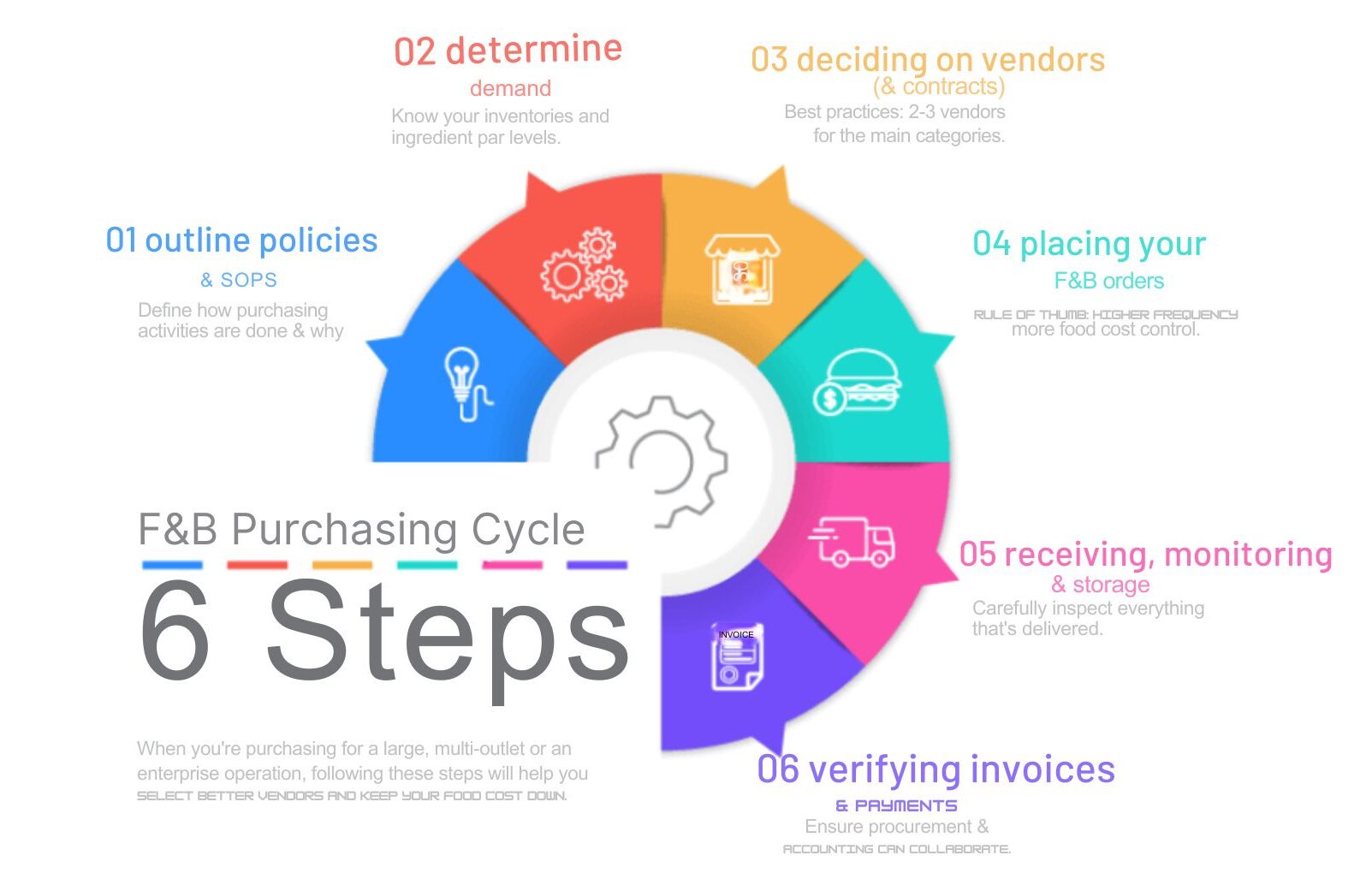
2. The main stages of the procurement process
Although procurement systems may vary depending on the size of the business, most follow a similar sequence.
- Identifying needs. The business determines what products or services are required, in what quantity and at what time.
- Searching for suppliers. Potential suppliers are identified and compared based on price, quality, reliability and other relevant criteria.
- Evaluating options. The entrepreneur or purchasing manager analyses available options and selects the most appropriate supplier.
- Purchasing and ordering. Orders are placed according to demand forecasts, stock levels and operational planning.
- Receiving and checking deliveries. Delivered products are checked to confirm that quantity, quality and conditions match expectations.
- Monitoring supplier performance. Over time, suppliers are evaluated based on punctuality, consistency, communication and product quality.
This process helps reduce risks and ensures that procurement decisions are based on planning rather than improvisation.
3. Procurement criteria in gastronomy
Procurement decisions are often influenced by price, but in professional gastronomy this should never be the only factor. Other key criteria include:
- product quality
- freshness
- availability and continuity of supply
- delivery reliability
- food safety guarantees
- sustainability and ethical standards
For example, a cheaper ingredient may seem attractive in the short term, but if it is inconsistent in quality or delivered irregularly, it may generate operational problems and customer dissatisfaction. This is why effective procurement requires a balance between cost, quality and reliability.
4. Procurement and business planning
Procurement is closely linked to planning. In gastronomy, buying decisions should be aligned with:
- menu design
- expected demand
- seasonality
- storage capacity
- cash flow
For example, ordering highly perishable ingredients without considering actual demand can lead to unnecessary waste and financial loss. On the other hand, poor planning can result in shortages that affect service quality. This means that procurement must be integrated into the broader management of the business.
5. Procurement risks and common problems
Poor procurement management can generate several challenges, especially in small gastronomy businesses. Common problems include:
- over-ordering or under-ordering
- inconsistent supplier performance
- receiving poor-quality goods
- lack of backup suppliers
- weak communication with suppliers
- purchases made without planning
These issues can have direct consequences for:
- operational continuity
- product quality
- customer satisfaction
- business profitability
Understanding procurement risks helps entrepreneurs make more informed and resilient decisions.
6. Procurement as a strategic skill for entrepreneurs
For young gastronomy entrepreneurs, procurement is not just about purchasing, it is about managing relationships, resources and decisions in a responsible way. Good procurement practices can help businesses:
- strengthen supplier partnerships
- improve cost control
- ensure better quality
- reduce waste
- support sustainability goals
In this sense, procurement becomes a key entrepreneurial skill that connects operations, finance, food quality and sustainability.
Infographic: Procurement process in gastronomy (needs → supplier → order → delivery → control)
Source Canva
Key takeaways
✔ Procurement is a strategic process, not just a purchasing task.
✔ It includes planning, supplier selection, ordering and performance monitoring.
✔ Price should be balanced with quality, reliability and sustainability.
✔ Procurement decisions affect costs, quality and customer satisfaction.
✔ Good procurement supports both efficiency and responsible entrepreneurship.
